Somewhere in a drawer at home there is a pen that has been doing nothing for years, and it is probably the one you should start with. Pen beat is unusual among percussion styles because the instrument costs almost nothing, which also means most beginners grab whatever is closest and then wonder why fast patterns feel clumsy and the taps sound mushy. The pen is not a detail. Weight, grip and balance decide how clearly each stroke reads, how long your hand lasts before it tires, and whether learning rolls feels like progress or punishment.
This guide walks through the three qualities that actually matter, then looks at the pen families you are most likely to pick up, so you can make a sensible first choice without spending much at all.
What You Are Asking the Pen to Do
Before comparing finishes and brands, it helps to know what the pen does while you play. Every stroke comes from one of three places: the tip or back end clicking off the desk, the side of the barrel landing flat as a body hit, and the small finger taps and flicks that fill the gaps between them.
Because the barrel carries most of the work, it behaves like a tiny drum shell. Stiff, hard plastic rings and cuts through; soft or thick plastic deadens the tone. A loose refill bouncing around inside buzzes on every hit, and a pen that rattles in your hand before you have played a note will rattle on the desk too. So the ideal starter pen is a rigid, hollow tube with as little loose hardware inside as possible.
Weight: Start Lighter Than You Think
Weight is the first thing you notice and the most common reason beginners put a pen down in frustration. A pen that feels almost weightless gives a thin, quiet sound and tempts you to push harder with your fingers. A very heavy pen gives you volume, but it drags on quick patterns and wears your hand out.
Light pens
Thin disposable ballpoints, capped or retractable, weigh very little. They are nimble, forgiving and excellent for rolls and finger-driven patterns. The trade-off is a small, bright sound that disappears in a noisy room.
Middleweight pens
A thicker-bodied gel pen or a metal-barrelled pen sits in the comfortable middle. The extra mass carries each stroke through, so your fingers guide the pen rather than force it. For most beginners this is the easiest place to start, because you get a fuller tone without fighting the pen.
Heavy pens
Weighted pens — built up with tape, wrapped with grip material, or made from a heavy metal body — sound loud and low. They are fun, but they hide sloppy technique and tire the hand quickly. Borrow one later, once your basic strokes are even.
Ignore any figure printed on packaging. Hold the pen, tap out a slow four-count on the desk, and ask yourself whether it feels more like a drumstick or a chip of wood. Your hand answers faster than a description can.
Balance: Where the Weight Sits
Balance matters as much as total weight, and it is the quality beginners overlook. Hold a pen between your thumb and the first two fingers and it will lean one way or the other.
A tip-heavy pen drops forward quickly. Attacks feel definite and controlled, but the whole hand tends to follow the tip down, which makes rapid alternating strokes harder. A rear-heavy pen — common when people tape up the back end or post the cap — feels light at the front and flicks back easily, which suits fast single taps but can feel vague on rolls and body hits.
Neutral balance, close to the middle of the barrel, is the easiest starting point. It lets you switch between tip hits and barrel hits without adjusting your grip mid-pattern. Find it by balancing the pen across one finger. That resting point is roughly where your hand should sit. If you want a reminder, wrap a thin ring of tape there.
Grip: Shape, Texture and Width
Shape is worth more than decoration. Hexagonal and octagonal barrels, the kind found on cheap ballpoints, resist rolling off the desk and give your index finger a flat edge to work against. That repeatable angle helps a lot while you are still building muscle memory. Round barrels twist in the hand and roll away between takes.
Texture is a matter of taste and sweat. Rubberised grips feel secure for slow, heavy hits but can drag on fast finger work once your hands warm up, and they pick up dust. Smooth metal plays fast and looks smart, but slips when it is hot. Bare, slightly matte plastic is a sensible compromise.
Width matters more than most people expect. If your thumb and index finger almost meet around the barrel, it is too thick for quick finger movement. If your fingertips wrap well past each other, it is too thin and will cramp your hand. Something close to a standard pencil is a good rule of thumb. Finally, check the clip: it digs into the base of the thumb and catches on the desk edge. A clipless pen, or one with a removable clip, is usually more comfortable to play.
The Main Families of Pen
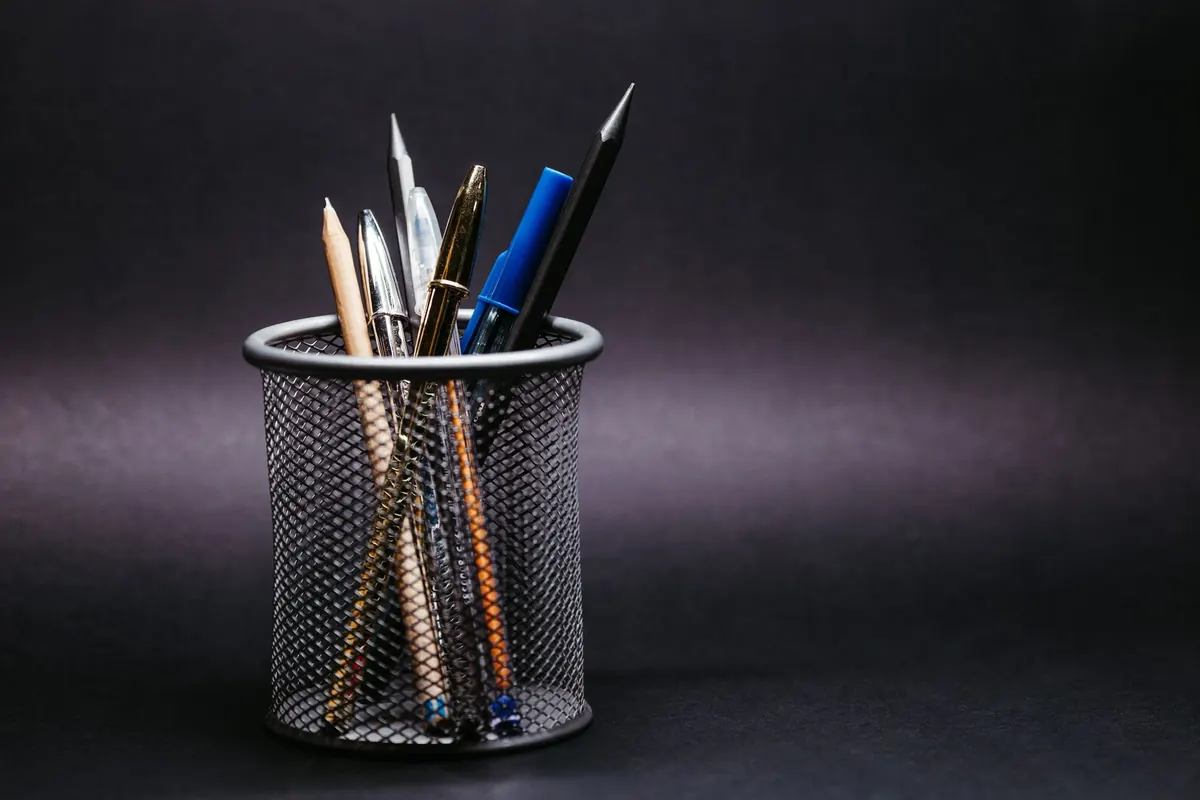
Disposable ballpoints
Cheap, light, often hexagonal and hollow. An excellent first pen. The refill tends to rattle, and thin plastic cracks if you drop it, so consider practising with a dry or emptied shell. That solves the rattle and the ink stains in one move.
Gel pens with rubber grips
Comfortable and a little heavier, with a softer tone. The sleeve slightly muffles the click and can feel tacky in a long session, but if you already enjoy writing with it, it will feel natural in your hand from day one.
Metal-barrelled pens
Sturdy, evenly balanced and durable. They hold their tone well and survive being knocked about. They are heavier and often slick, so they suit players who have settled into a grip and want a long-term tool.
Modded and weighted pens
Pens built up with tape, heat-shrink tubing or purpose-made weighted parts. Great for volume and low tones, and a natural next step once you know what you like. Keep an unweighted pen nearby for technique practice.
A Short Checklist, and Traps to Avoid
- Stiff, hollow barrel that rings rather than thuds.
- Nothing loose inside — no rattling refill, no clicking mechanism that buzzes. A gutted shell is ideal.
- Pencil-ish width so your fingers can move freely.
- A shape that stays put in your hand and on the desk — hexagonal beats round.
- A clip that does not bite your thumb or snag the desk.
- Cheap enough to lose, because you will.
The classic beginner mistakes are all small. Wrapping tape around the middle without thinking, and shifting the balance backwards. Choosing a beautiful, expensive pen first and then treating it like glass. Practising with a leaking pen and spending more time cleaning ink off the desk than playing. And cutting the clip off a pen that belongs to somebody else.
Start With One Pen for Two Weeks
Pick one pen, then use only that pen for a fortnight. Consistent weight and balance let your hand learn a stroke properly instead of readjusting to a new tool every session. When you do want to change something, change one thing: a little tape at the back, or a swapped body, never three adjustments at once.
Keep a spare of the same model, wipe the barrel now and then, and retire any pen that has developed a crack, because a split barrel rattles and will not hold a clean tone. If your wrist or fingers ache during practice, stop and rest; pain that persists is worth a chat with a physiotherapist or your GP rather than more repetitions.
Get the basics right with a pen that already lives in your pencil case, and the rest of pen beat becomes a matter of practice rather than equipment.
Photo: Jonathan Borba / Pexels